Landscaping
Mulch Calculator — Bags vs Bulk Cost
Enter bed dimensions, mulch depth, bag volume, supplier bulk increment, and optional real prices to compare independently rounded bag and bulk material orders.
Formula tested · Local units · No sign-up
Project inputs
Enter measurements
Use your preferred units. Results update automatically.
Show the calculation methodFormula, conversions, rounding, and assumptions+
Volume = bed area × depth. Because depth is in inches while the bed is measured in feet, the calculator converts first — a 3-inch layer is 0.25 ft, so a 120 sq ft bed needs 120 × 0.25 = 30 cubic feet.
US mulch is sold two ways: by the bag (2 cubic feet is a common size — check your product) or in bulk by the cubic yard (27 cubic feet). The calculator shows both, rounding bags up to whole bags.
A bulk quote is applied only after the 1.167 yd³ example volume rounds to the entered 0.5 yd³ sale increment; 1.167 yd³ therefore becomes a 1.5 yd³ order, while bags round independently to 16.
Real-world example
Worked example: 10 ft × 12 ft bed, 3 in deep
- Area: 10 × 12 = 120 square feet.
- Convert depth: 3 in ÷ 12 = 0.25 ft.
- Volume: 120 × 0.25 = 30 cubic feet.
- Add 5% wastage: 30 × 1.05 = 31.5 cubic feet (= 1.17 cubic yards).
- Bags: 31.5 ÷ 2 = 15.75, rounded up to 16 bags of 2 cu ft.
- At an entered 0.5 yd³ supplier increment, 1.167 yd³ rounds to a 1.5 yd³ bulk order; the added 0.333 yd³ is supplier rounding, not more wastage.
The purchase choices are 16 two-cubic-foot bags or 1.5 yd³ in bulk at the example increment. Enter current supplier prices and tax to compare material totals; delivery and minimum-load fees stay separate.
Before you start
How to measure
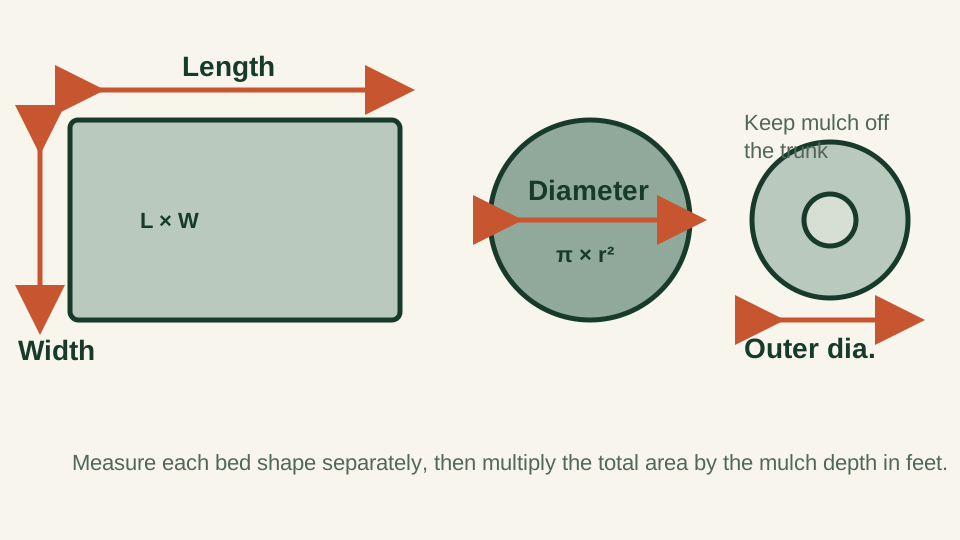
- Measure bed length and width in feet at the widest points; for irregular beds, split into rectangles and add the areas, then use the total-area mode.
- Pick a depth for the job: a 2–3 inch layer is typical for topping up, 3–4 inches for new beds and weed suppression.
- Keep mulch a few inches away from trunks and stems — measure the bed area you'll actually cover, not the full planting footprint.
Local guidance
Notes for United States
- US retail mulch is usually bagged in cubic feet (2 cu ft is common, 1.5 and 3 cu ft also exist) — check the bag before relying on the default.
- Bulk mulch from landscape yards is sold by the cubic yard; above roughly a yard, bulk delivery often beats hauling bags.
- Sales tax varies by state and locality; bag prices on the shelf normally exclude it.
Quick reference
Mulch depth quick reference (typical planning values)
| Application | Common depth |
|---|---|
| Annual top-up of existing beds | 1–2 in |
| General beds and borders | 2–3 in |
| New beds / weed suppression | 3–4 in |
| Around trees (clear of trunk) | 2–4 in |
Planning values only — deeper isn't always better; over-mulching can suffocate roots.
Good to know
Common mistakes to avoid
- Multiplying square feet by inches without converting — this overstates volume by 12×.
- Assuming every bag is 2 cubic feet: sizes vary by brand and material, and bark nuggets, shredded hardwood and dyed mulch all come in different bag sizes.
- Skipping the wastage allowance — mulch settles and spreads unevenly, so 5% extra is a sensible buffer.
- Measuring the whole yard instead of just the beds being covered.
Need help?
Frequently asked questions
How many 2 cu ft bags make a cubic yard?
A cubic yard is 27 cubic feet, so 27 ÷ 2 = 13.5 — you'd need 14 bags to cover what one bulk cubic yard covers. That ratio is the quickest way to compare bag and bulk pricing.
How much mulch for 200 square feet at 3 inches?
200 × 0.25 = 50 cubic feet. With 5% wastage that's 52.5 cubic feet, or 1.94 cubic yards — 27 bags of 2 cu ft (52.5 ÷ 2 = 26.25, rounded up).
Should I buy bags or bulk?
Bags are easier to handle and store; bulk is usually cheaper per cubic yard and avoids plastic waste. Run the calculator, then compare the bag total against your landscape yard's bulk quote — enter your supplier's prices, as they vary by material and region.
Keep planning
Related calculators
Measure with confidence
Planning guides for this project
Transparency
About this calculator
- Written by:
- BuildMeasure Editorial Team
- Technically reviewed by:
- Pending independent technical reviewer (formula unit-tested; see methodology)
- Last reviewed:
- 2026-07-20
- Formula version:
- 1.1.0
- Region reviewed for:
- United States
- Spotted an error?
- Report a correction
Methodology
- Volume is computed as bed area × depth. You can enter the area directly or as length × width; either way all inputs are converted to SI units (metres) before any arithmetic to avoid unit drift.
- The wastage allowance is applied to the exact volume to cover settling and uneven spreading.
- Bag counts divide the total volume by the bag size you enter and round UP to whole bags, because you can't buy a fraction of a bag. The default bag size is a clearly-labelled common retail size (2 cubic feet in the US, 50 litres elsewhere) and is fully editable.
- Bulk order = allowance-adjusted volume rounded UP to the exact supplier increment you enter. Bulk-increment rounding is reported separately from the spreading allowance.
- Bag and bulk material totals use their independently rounded purchase quantities and only the prices and tax rate you enter. No current prices, delivery fee, or universal bulk increment is built in.
- The formula is covered by automated unit tests, including hand-calculated worked examples, and is versioned (see formula version on this page).
Sources & standards
- Unit definitions: 1 ft = 0.3048 m and 1 yd³ = 27 ft³ (exact definitions).
- Bag sizes: 2 cu ft is a common US retail mulch bag size, used as an editable default — check your product.
This tool provides a material estimate and entered-price comparison for planning only. It is not a quotation. Bag sizes, loose volume, moisture, compaction, minimum loads, sale increments, delivery, access, and product quality vary. Confirm quantities, package volumes, bulk units, and all charges with the supplier before buying.