Concrete planning guide
How Much Postcrete per Fence Post (UK)
Turn fence-post hole size into rapid-set post-mix bags for UK fencing using the bags-per-post figure printed on the label, with more for gate and corner posts.
Published 2026-07-20 · Updated 2026-07-20 · BuildMeasure Editorial Team
Next step
Turn your measurements into a material estimate
Enter the recorded dimensions in the calculator. It shows the calculated amount, wastage allowance, and a supplier-ready suggested order.
Use the Concrete Volume CalculatorPostcrete is rapid-set post-mix — plan it by the bag
"Postcrete" is the name most UK fencers use for rapid-setting post-mix: a dry, pre-blended bag of cement and aggregate that you pour into the hole around a post and wet down, and that sets in minutes. It is sold under several brand names in standard 20 kg bags, so the word has become a general term rather than one product.
Because you buy it by the bag and not by the cubic metre, the useful answer is a bag count, not a volume. The most reliable bag count is the one printed on the bag: manufacturers state how many bags a standard post needs. This guide shows how to check that figure against your actual hole size and how to allow more for heavier posts.
Size the hole first: width and depth
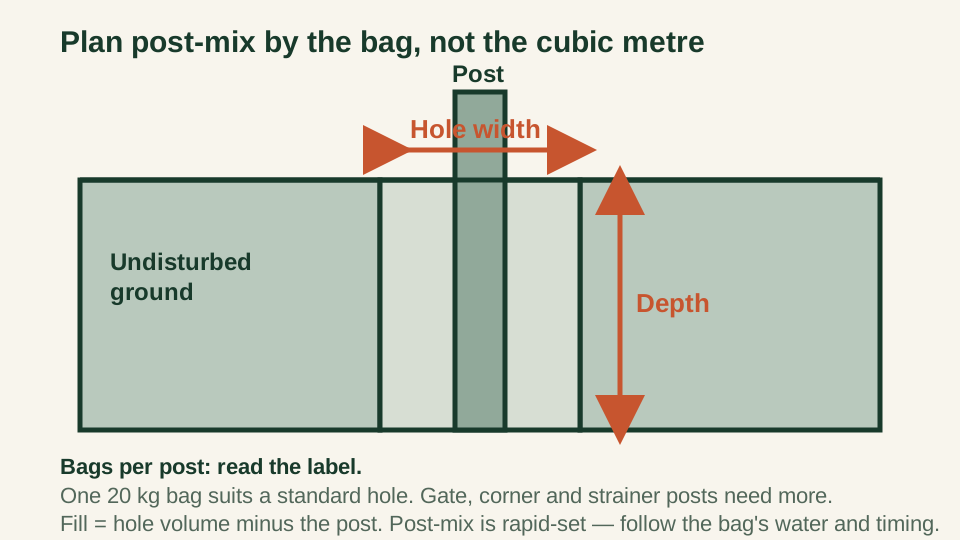
The concrete fills the hole around the post, so the hole size drives the quantity. A round hole is a cylinder: volume = π × radius² × depth. Fencing holes are usually dug about three times the width of the post — the figure Blue Circle's instructions use — so there is a collar of concrete on every side.
Measure the hole width across the top and the depth from the bottom to ground level. The table gives the cylinder volume in litres for common hole sizes, so you can see how quickly a wider or deeper hole increases the fill.
| Hole width | Hole depth | Volume (litres) |
|---|---|---|
| 100 mm | 600 mm | 4.7 |
| 150 mm | 600 mm | 10.6 |
| 200 mm | 600 mm | 18.8 |
| 250 mm | 750 mm | 36.8 |
Each figure is π × radius² × depth, before subtracting the post. One litre is 0.001 m³. Deeper holes for gate and corner posts increase the fill in proportion to depth.
Bags per post come from the label
Manufacturers give a bags-per-post figure for typical fencing. Blue Circle's Postcrete data sheet, for example, lists one 20 kg bag for a 100 mm (4 in) square post in a hole 200 mm (8 in) wide and 750 mm (30 in) deep, with fractions of a bag for smaller holes and more for wider ones. Different products word this differently, so read the table on the bag you buy.
Do not convert litres to bags with a yield you have guessed. If the bag gives a set volume per bag, divide your hole litres by that figure; if it only gives bags per post, use that directly. Either way, the printed figure is the one to trust.
Gate, corner and strainer posts need more
End, corner, gate, and straining posts carry more load than a mid-run post. They are usually larger in section and set in a wider, deeper hole, so they take more post-mix — often two bags or more per post. Count these posts separately from the standard run posts.
Subtract the post itself if you want the exact fill: the post displaces concrete equal to its cross-section times its set depth. In practice the label's bags-per-post figure already assumes a post in the hole, so for standard posts you can use it as-is and keep the subtraction for unusually large sections.
Worked example: a 200 mm hole with a 100 mm post
A timber post 100 mm square is set in a 200 mm-wide hole, 600 mm deep.
Hole volume: π × 0.1² × 0.6 = 0.0189 m³, or about 18.8 litres. The post displaces 0.1 × 0.1 × 0.6 = 0.006 m³, about 6 litres, leaving roughly 12.8 litres of post-mix for that hole. Compare that with the bags-per-post figure on your bag to decide whether one bag covers it or you need two. For a whole fence, multiply the standard-post figure by the run, then add the extra bags for gate and corner posts.
Fence-run checklist
Plan the whole run before buying, so the standard and heavy posts are counted separately.
- Number of standard mid-run posts, with the typical hole width and depth.
- Number of gate, corner, end, and straining posts, listed separately.
- Post section size, so you know how wide to dig each hole.
- Hole depth for each post type, from the bottom of the hole to ground level.
- Bags-per-post figure read from the actual product label.
- Extra bags allowed for the heavier posts and any oversized or soft-ground holes.
- Clean water on site, since rapid-set post-mix is mixed in the hole and sets in minutes.
Same project
Related measurement guides
Sources and limits
Check the project-specific details
- Blue Circle Postcrete product data sheet (Tarmac) — Manufacturer data sheet with the bags-per-hole table for 20 kg Postcrete, hole-sizing instructions, and the 5-to-10-minute setting time.
- Holcim UK Postmix — A second manufacturer's post-mix product page; confirm bags per post and setting time on the bag you buy.
- NIST unit conversion reference — Reference for the metric length and volume definitions used in the litre calculations.
Review status: Formulas and conversions covered by automated tests; measurement practice pending human trade review.
This guide supports planning only. It does not specify structural design, code compliance, or a supplier quotation.