Concrete planning guide
How to Measure Post Holes for Concrete
Use the post-hole concrete calculator by measuring hole depth, diameter, and post size. Handle multiple holes and account for post displacement in the volume.
Published 2026-07-16 · Updated 2026-07-19 · BuildMeasure Editorial Team
Next step
Turn your measurements into a material estimate
Enter the recorded dimensions in the calculator. It shows the calculated amount, wastage allowance, and a supplier-ready suggested order.
Use the Post Hole Concrete CalculatorPost holes are cylinders — measure depth and diameter
A post hole concrete calculator needs three numbers to work: hole diameter, hole depth, and — if the post stays in the hole — the post size for displacement. Enter those and the calculator returns the cylinder volume as cubic yards or bags.
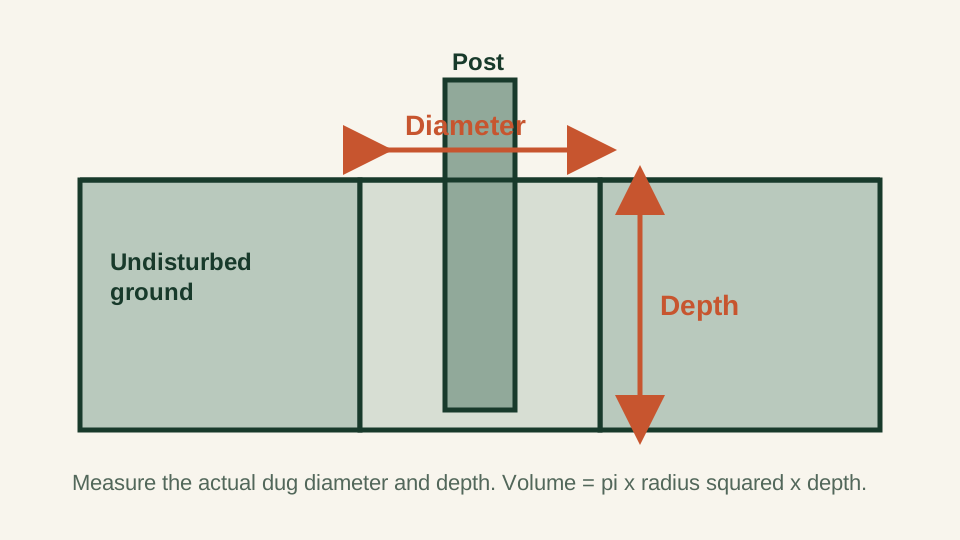
A post hole is a cylinder. Its volume is the area of the circular bottom multiplied by the depth: π × r² × depth, where r is half the diameter.
Measure the hole depth from the finished ground level (or the planned bottom of the footing) to the bottom of the hole. Measure the diameter across the top of the hole. The hole diameter is set by the auger or excavation tool, not the post size.
Record every measurement in inches for consistency. The calculator will convert to cubic yards for concrete ordering.
Account for the post displacement
The post itself displaces concrete. If the post stays in the hole permanently and is set in concrete, subtract its volume from the hole volume.
For a square post, use the post side length to estimate displacement (side² × depth). For a round post, use πr² × depth. If the post is cut out or the concrete sits only partially around it, use judgment about how much volume is actually taken up by wood instead of concrete.
For temporary bracing posts or posts pulled before the concrete sets, concrete fills the entire hole and there is no subtraction needed.
Handle multiple holes by calculating each one
Do not estimate multiple post holes at an average. Holes vary in depth and diameter. Measure and calculate each hole separately, then add the concrete volumes together.
A deck with eight 10-inch holes at different depths takes individual measurement. A fence line with 20 identical post holes at 8 feet on center can be measured once and multiplied.
Pre-pour field checklist
Before ordering concrete, record every post hole you plan to fill. Walk the entire footprint with a tape measure and write down the depth and diameter for each location.
- Hole number or location label (corner, run position, etc.)
- Hole diameter in inches, measured across the top.
- Hole depth in inches, from finished ground to the bottom of the hole.
- Post dimensions in inches (width for square, diameter for round), if the post stays in the hole.
- Estimated post displacement volume, subtracted from the hole volume.
- Any holes filled with gravel or base material before concrete (reduces the concrete volume).
- Total number of identical holes, if repeating the same dimensions.
Worked example: four deck posts
A small deck has four corner posts in 12-inch auger holes, 30 inches deep. The 6×6 posts stay in the hole.
Hole volume per corner: π × (6 in)² × 30 in ≈ 3,393 cubic inches. Four identical holes: 3,393 × 4 ≈ 13,572 cubic inches. Subtract post displacement for each: 6 × 6 × 30 = 1,080 cubic inches per post. Total post displacement: 1,080 × 4 = 4,320 cubic inches. Net concrete volume: 13,572 − 4,320 = 9,252 cubic inches. Divide by 1,728 to get 5.35 cubic feet, or about 0.20 cubic yards. That volume is bag territory: at an approximate 0.30 cu ft yield per 40 lb bag it is about 18 bags, or about 9 bags at an 80 lb yield of 0.60 cu ft — add a small waste allowance and confirm the yield printed on the bag you buy.
Same project
Related measurement guides
Sources and limits
Check the project-specific details
- NIST unit conversion reference — Reference for exact inch and yard definitions used in volume conversions.
- Portland Cement Association design guides — General concrete design and sizing guidance for structural applications.
Review status: Formulas and conversions covered by automated tests; measurement practice pending human trade review.
This guide supports planning only. It does not specify structural design, code compliance, or a supplier quotation.