Concrete planning guide
How Much Concrete for Sonotube Piers and Columns
Work out the concrete for cylindrical Sonotube piers and columns from tube diameter, depth, and count, then convert cubic feet to cubic yards or bags.
Published 2026-07-20 · Updated 2026-07-20 · BuildMeasure Editorial Team
Next step
Turn your measurements into a material estimate
Enter the recorded dimensions in the calculator. It shows the calculated amount, wastage allowance, and a supplier-ready suggested order.
Use the Concrete Volume CalculatorA pier in a tube is a cylinder — measure diameter and depth
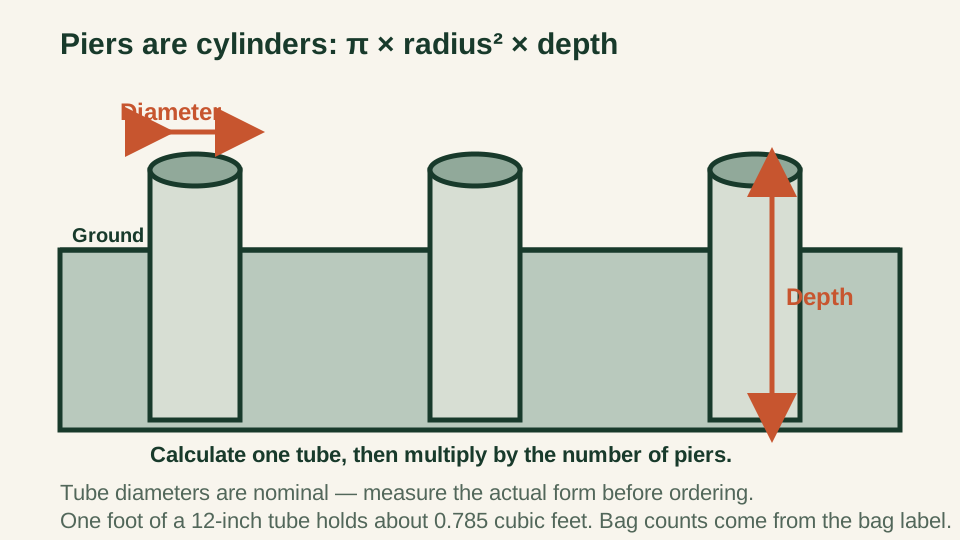
A Sonotube pier or column is a cylinder of concrete. Its volume is the area of the circle times the pour depth: π × radius² × depth, where the radius is half the tube's inside diameter. That single formula covers deck footings, fence and lamp-post bases, and structural columns formed in a round tube.
Measure the tube's inside diameter and the depth of concrete from the bottom of the hole to the finished top of the pour. Keep the diameter in inches and the depth in inches or feet, but convert to one unit before multiplying — a 12-inch tube has a 6-inch (0.5 ft) radius, not a 12-inch one.
The concrete volume calculator does this for you: choose the cylindrical shape, enter the diameter and depth, and set the number of identical piers.
Tube diameters are nominal — measure the actual form
Sonotube is a brand of fiber concrete form made by Sonoco. Its round forms come in nominal diameters — common sizes include 6, 8, 10, 12, 16, 18, and 24 inches, with larger commercial sizes above that. The manufacturer states that the diameters are nominal and advises measuring the tube when the exact dimension matters, because forms can vary slightly.
For a planning estimate the nominal size is close enough, but a small change in diameter moves the volume more than you might expect, because volume depends on the radius squared. If you are close to a supplier minimum or a whole-bag boundary, measure the real inside diameter first.
| Nominal diameter | Radius | Cubic feet per foot of depth |
|---|---|---|
| 6 in | 0.25 ft | 0.196 |
| 8 in | 0.333 ft | 0.349 |
| 10 in | 0.417 ft | 0.545 |
| 12 in | 0.5 ft | 0.785 |
| 16 in | 0.667 ft | 1.396 |
| 18 in | 0.75 ft | 1.767 |
| 24 in | 1.0 ft | 3.142 |
Each figure is π × radius². Multiply by the pour depth in feet, then by the number of piers. Diameters are nominal — confirm the form and the bag yield before ordering.
Multiply by the number of piers — and keep unequal depths separate
Most jobs use several identical piers. Calculate one, then multiply by the count. Six 10-inch piers each 4 feet deep are 0.545 × 4 × 6 = 13.08 cubic feet.
When depths differ — piers stepping down a slope, or a deeper column at a corner — do not average them. Calculate each depth separately and add the volumes, the same way the post-hole guide handles holes of different depths.
Turn cubic feet into a ready-mix order or a bag count
For a ready-mix delivery, convert the total to cubic yards by dividing by 27, add your waste allowance, and round up to the supplier's increment. A handful of piers rarely reaches a truck's minimum load, so bagged concrete is often more practical.
For bagged concrete, divide the total cubic feet by the yield printed on the bag. Yields differ by product and bag weight, so read the bag rather than assuming — the bag-yields guide explains how the printed figure works. This guide sizes the concrete only; the tube, footing base, reinforcement, and pier depth are separate design questions set by your plans and local code.
Worked example: four 12-inch piers, 4 feet deep
Four 12-inch tubes, each poured 4 feet deep, with the same dimensions throughout.
Per pier: π × 0.5² × 4 = 0.785 × 4 = 3.14 cubic feet. Four piers: 3.14 × 4 = 12.57 cubic feet. In cubic yards: 12.57 ÷ 27 = 0.47 cubic yards; with a 10% waste allowance that is 0.52, which rounds up to 0.75 cubic yards at a quarter-yard increment.
If you hand-mix instead, divide 12.57 cubic feet by the yield on your bag. At a common 80 lb yield of about 0.60 cubic feet that is roughly 21 bags before waste — always confirm the yield on the bag you buy.
Field checklist before you order
Walk the layout with a tape measure and record every pier before you calculate.
- Tube inside diameter in inches, measured on the actual form, not just the label.
- Pour depth for each pier, from the bottom of the hole to the finished top.
- Number of piers at each depth, grouped so identical piers are counted together.
- Any deeper columns or corner piers measured and listed on their own line.
- Whether a flared footing base is used under the tube, which adds volume beyond the straight cylinder.
- Your chosen waste allowance, added after the piers are totalled.
- Ready-mix or bags, with the bag yield read from the product if you are mixing by hand.
Same project
Related measurement guides
Sources and limits
Check the project-specific details
- Sonotube concrete forms (Sonoco) — Manufacturer product information; form diameters are nominal and should be measured when the exact dimension matters.
- NIST unit conversion reference — Reference for the exact foot and cubic yard definitions used in the conversions.
Review status: Formulas and conversions covered by automated tests; measurement practice pending human trade review.
This guide supports planning only. It does not specify structural design, code compliance, or a supplier quotation.