Garden planning guide
How Much Soil for a Raised Garden Bed
Calculate how much soil a raised garden bed needs from inside length, width and fill depth, split by your soil-to-compost ratio, with settling as your input.
Published 2026-07-20 · Updated 2026-07-20 · BuildMeasure Editorial Team
Next step
Turn your measurements into a material estimate
Enter the recorded dimensions in the calculator. It shows the calculated amount, wastage allowance, and a supplier-ready suggested order.
Use the Topsoil CalculatorFill volume = inside length × width × fill depth
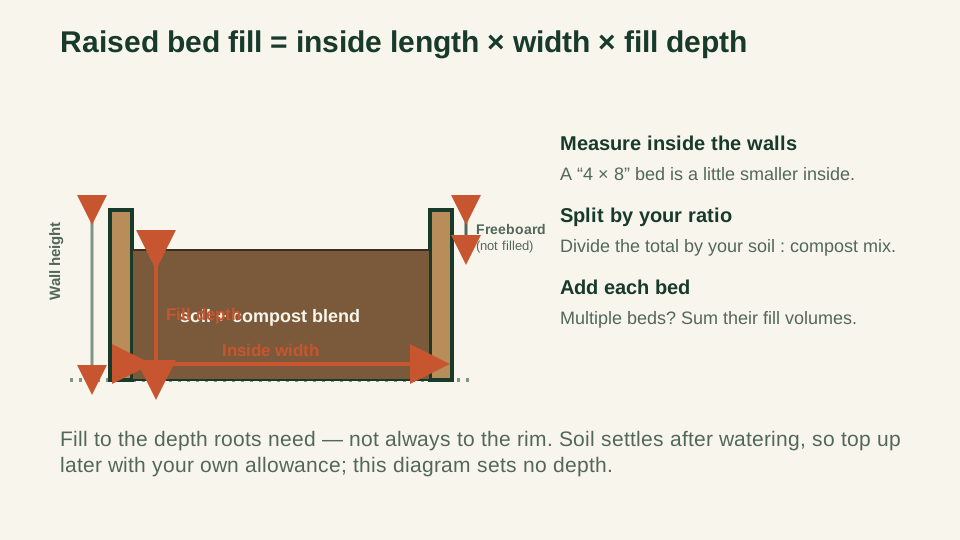
A raised bed is a container, so the soil you need is its inside length × inside width × the depth you fill. Measure inside the walls: a bed built from nominal lumber to a '4 ft × 8 ft' plan is a little smaller inside, and the interior is what holds soil.
Convert the fill depth from inches to feet (divide by 12) before multiplying. Divide cubic feet by 27 for cubic yards if you are buying in bulk, or by the bag size for bags.
Fill to the depth roots need, not always to the rim
The fill depth is your choice and is often less than the wall height. Many beds are filled to a usable rooting depth with the top few inches left as freeboard, or have a coarse base layer or existing ground occupying the bottom. Measure the depth you will actually fill with soil, not the height of the boards.
This guide sets no depth. Deep-rooted crops, shallow beds over pavement, and beds over open ground all call for different fill depths — that is a gardening decision you bring to the measurement.
Split the total by your soil-to-compost ratio
Raised-bed mixes are usually a blend of topsoil or bulk garden soil and compost. This page measures the total fill volume; split that total by whatever ratio you choose. A 50:50 mix means half the volume in each; a 3:1 mix means three-quarters and one-quarter.
The ratio is your decision or your supplier's recommendation — this guide does not prescribe a blend. Order each component to its share of the total volume.
Settling and top-up are your call
Fresh soil and compost settle after the first few waterings, so the level drops and you top up later. The amount is a gardener's judgement, not a fixed figure; order a modest extra now if you want to pre-empt it, using the calculator's editable wastage allowance.
Compost also keeps breaking down over a season, which is normal top-up territory rather than something to solve at the ordering stage.
Convert the fill volume to bags or bulk
The topsoil calculator accepts inside bed dimensions, fill depth, and the number of identical beds directly. It keeps exact volume, your settling/handling allowance, supplier bulk-increment rounding, and optional whole-bag rounding separate.
| Quantity | How to get it |
|---|---|
| Cubic feet | inside length × inside width × (fill depth ÷ 12) |
| Cubic yards | cubic feet ÷ 27 |
| Bags | cubic feet ÷ the bag size on the label, rounded up |
| Soil vs compost | split the total by your chosen ratio |
Bag volumes vary by product (often 1.5, 2, or 3 cubic feet) — use the figure printed on the bag.
Worked example: a 4 ft × 8 ft bed
Say the interior measures 4 ft × 8 ft and you fill it to 10 inches — a 12-inch-tall bed with 2 inches of freeboard. Interior area: 4 × 8 = 32 square feet.
Fill volume: 32 × (10 ÷ 12) = 26.67 cubic feet ≈ 0.99 cubic yards.
If your bags are 1.5 cubic feet each: 26.67 ÷ 1.5 = 17.8, rounded up to 18 bags. For a 50:50 soil-and-compost mix, that is 9 bags of each. Add your own settling top-up if you want a buffer.
Multiple beds and worksheet
Measure every bed, calculate each fill volume, and add them for one order.
- Inside length and width of each bed (ft) — measured inside the walls.
- Fill depth you will actually use for each bed (in), converted to feet.
- Fill volume per bed (cu ft), then the total across all beds.
- Total in cubic yards (÷ 27) for bulk, or bag count (÷ bag size, rounded up).
- Your soil-to-compost ratio, and each component's share of the total.
- A settling top-up allowance if you want one (your figure).
- Bag size confirmed from the product label; supplier price entered for a cost estimate.
Same project
Related measurement guides
Sources and limits
Check the project-specific details
- NIST unit definitions — Exact foot, cubic-foot, and cubic-yard definitions used in the fill-volume conversions.
- USDA NRCS soil resources — Federal soil references, including the distinction between topsoil and fill, and the Web Soil Survey for your location. This guide gives no planting or blend advice.
Review status: Formulas and conversions covered by automated tests; measurement practice pending human trade review.
This guide supports planning only. It does not specify structural design, code compliance, or a supplier quotation.