Concrete planning guide
Ready-Mix vs. Bagged Concrete: When to Use Each
Decide between ready-mix delivery and bagged concrete based on volume, access, working time, and site conditions. Compare cost, effort, and practicality.
Published 2026-07-16 · Updated 2026-07-30 · BuildMeasure Editorial Team
Next step
Turn your measurements into a material estimate
Enter the recorded dimensions in the calculator. It shows the calculated amount, wastage allowance, and a supplier-ready suggested order.
Compare Exact Bag Counts and Entered CostsVolume and working time are the main trade-offs
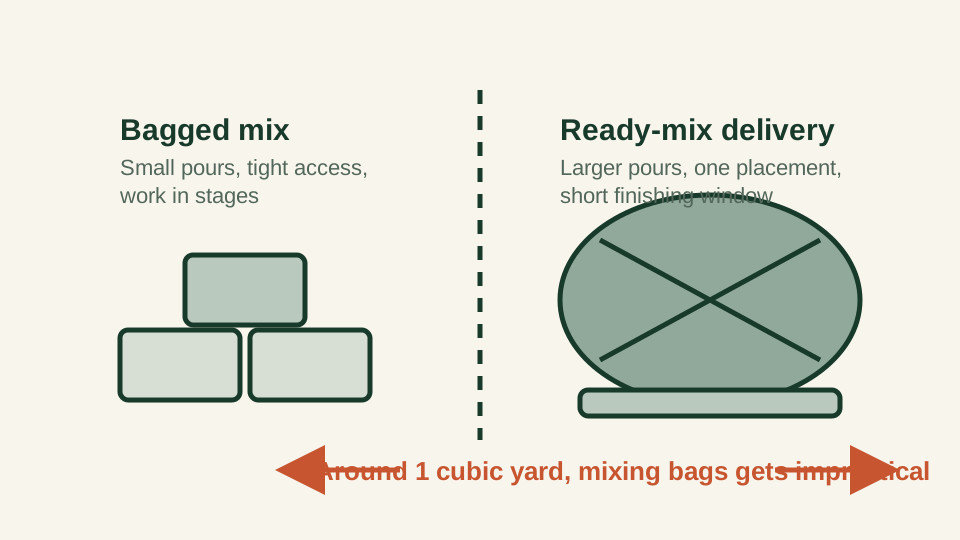
Bagged concrete is mixed on-site in batches. Ready-mix arrives already mixed in one or more scheduled truck loads, depending on the order and supplier plan.
There is no universal volume where one option becomes cheaper or more practical. Start with the required volume, then compare whole-bag count and batching effort with a supplier's delivered ready-mix quote. Access, minimum orders, short-load fees, labor, equipment, placement rate, and the exact products available can move the crossover substantially.
Confirm access with the concrete supplier
Do not use a generic truck width, height, turning radius, reach, or driveway-load figure. Give the supplier the site address and describe the gate, overhead clearance, turns, slope, surface, utilities, and distance from the proposed truck position to the forms. The dispatcher or driver must decide whether their specific vehicle can use the route.
If the truck cannot safely reach the placement point, ask the supplier what chute, conveyor, pump, or carting arrangement is available and what it costs. Keep vehicles away from unsupported edges, septic systems, buried services, and surfaces that have not been approved for the load.
Bagged material can be carried closer to a restricted site, but it still needs dry storage, safe material handling, water, mixing space, and a workable route from mixer to form.
Use the product or supplier's placement window
Working time is product- and condition-specific. Temperature, wind, mix design, admixtures, delivery conditions, batch size, substrate, and crew capacity all matter. Follow the current bag directions for bagged material and ask the ready-mix supplier for the planned mix, delivery sequence, and placement constraints.
Small bagged batches can reduce the amount exposed at once, but they do not make a continuous placement self-paced. The crew must be able to mix, move, place, consolidate, strike off, and finish each batch without creating unwanted cold joints or adding water beyond the product instructions.
Before ordering either option, plan the crew, tools, formwork, access, weather response, curing materials, washout, and a safe place for any leftover material.
Cost comparison: plug in your supplier prices
For bagged material, divide required mixed volume by the exact product yield, round up to whole bags, and multiply by the entered price per bag. Add any delivery, pickup, equipment, tax, and labor costs that apply. The Concrete Bag Calculator compares up to three exact products and exposes both whole-bag surplus and the pre-tax bag subtotal.
For ready-mix, use the Ready-Mix Concrete Cost Calculator to normalize the supplier's quoted volume increment, minimum billed quantity, per-load fee, short-load charge, delivery fee, pump or access costs, and tax. Compare complete current quotes; there is no universal cheaper option.
| Factor | Bagged concrete | Ready-mix concrete |
|---|---|---|
| Quantity basis | Whole bags from the exact product yield | Supplier's physical and billed delivery quantities |
| Site access | Requires a safe carrying route, dry storage, water, and mixing area | Requires supplier confirmation of vehicle access and discharge method |
| Labor | Adds bag handling, batching, and mixer operation to placement and finishing | Removes on-site batching but still needs a crew sized for discharge, placement, consolidation, and finishing |
| Working time | Product-specific batches coordinated as one placement | Mix- and supplier-specific delivery and placement plan |
| Equipment | Rented or owned mixer, or wheelbarrow and hoe | Forms and placing tools; pump, conveyor, carts, or other access equipment may be required |
| Cost estimate | Per-bag price × bag count (cu yd × 27 ÷ bag yield in cu ft, rounded up) | Per cu yd price × ordered volume (at least the minimum load) + delivery fee |
Step-by-step decision process
Start with approved project dimensions and calculate the exact volume. Apply the same explicit planning allowance to both options. Price whole bags using the exact product yield, then request a written ready-mix quote that separates billed volume and fees. Confirm access and placement plans with the supplier before comparing totals.
Cost is only one constraint. Choose an option that the available crew and equipment can place and finish continuously within the relevant product or supplier instructions. For structural work or uncertain slab, footing, reinforcement, joint, or mix requirements, use approved plans or a qualified local professional.
- Calculate exact concrete volume from approved dimensions.
- Choose and display one explicit planning allowance for both comparisons.
- Record the exact bag product, stated yield, whole-bag count, bag subtotal, delivery or pickup, mixer, tax, and labor.
- Request the ready-mix price, billed increment, minimum quantity, short-load or delivery fees, number of loads, tax, and any pump or access charges.
- Ask the supplier to confirm the proposed vehicle route and discharge method.
- Plan crew, batching or delivery sequence, placement, consolidation, finishing, curing, washout, and leftover material.
- Compare complete entered costs and practical placement capacity; do not rely on a generic volume cutoff.
Same project
Related measurement guides
Sources and limits
Check the project-specific details
- NRMCA CIP 31 — Ordering Ready Mixed Concrete — Primary industry guidance on information to provide when ordering and coordinating delivery.
- QUIKRETE Concrete Mix No. 1101 specification data — Primary manufacturer sheet for named 40, 60, and 80 lb package yields and product instructions.
- SAKRETE 5000 Plus product data — Primary manufacturer page for named 50, 60, and 80 lb package yields.
Review status: Formulas and conversions covered by automated tests; measurement practice pending human trade review.
This guide supports planning only. It does not specify structural design, code compliance, or a supplier quotation.